On This Page
Suffered a Traumatic Brain Injury? Our Providence Brain Injury Attorneys Can Help
A traumatic brain injury can disrupt brain function in ways that affect memory, concentration, movement, mood, employment, and independence.
When the injury was caused by someone else’s negligence, a personal injury lawsuit may allow the injured person to seek compensation for medical care, lost income, future treatment, and other lasting losses.
A Providence brain injury lawyer can investigate how the harm occurred, document its long-term effects, and identify the parties and insurance coverage that may apply.
Marasco & Nesselbush represents people with traumatic brain injuries throughout Providence and Rhode Island.
Marasco & Nesselbush: Representing Rhode Islanders Since 1999
Brain injuries can affect memory, judgment, communication, mobility, mood, and the ability to manage ordinary responsibilities.
Some people recover after treatment and rehabilitation, while others experience permanent injuries that change their ability to work, live independently, or maintain important relationships.
A severe TBI may require surgery, extended hospitalization, cognitive therapy, personal assistance, and ongoing medical care, and the most serious injuries can result in even death.
Because the effects are not always visible on routine imaging, establishing the full extent of the harm may require neurological evaluations, neuropsychological testing, medical records, and testimony from people who observed the changes firsthand.
When another party causes a brain injury, a personal injury attorney can investigate how the incident occurred, identify the responsible parties, and document both current losses and future needs.
Since 1999, our personal injury law firm has represented Rhode Islanders injured in motor vehicle crashes, falls, workplace incidents, medical negligence cases, and other preventable events.
We work to connect the medical evidence to the accident and pursue compensation for treatment, lost income, reduced earning capacity, rehabilitation, and the lasting personal effects of the injury.
If you or a loved one has suffered a brain injury, a personal injury attorney from Marasco & Nesselbush can review your case, explain your options, and handle the claim from start to finish.
We offer free consultations and take these cases on a contingency fee, which means you pay no attorney fees unless we recover compensation for you.
Why Brain Injury Victims in Providence Choose Marasco & Nesselbush
A brain injury claim must account for more than the medical treatment already received.
The case may also involve future rehabilitation, reduced earning capacity, cognitive and behavioral changes, loss of independence, and the need for long-term assistance.
Since 1999, we have represented injured Rhode Islanders in complex personal injury cases and recovered more than $500 million for our clients.
Clients choose Marasco & Nesselbush because we provide:
- Experience with serious brain injury claims: We understand how traumatic brain injuries can affect memory, communication, employment, relationships, and everyday decision-making.
- Detailed medical documentation: We review treatment records, diagnostic testing, rehabilitation plans, and other evidence needed to establish the nature and extent of the injury.
- Access to qualified medical experts: When appropriate, we work with neurologists, neuropsychologists, life-care planners, vocational specialists, and other medical experts who can explain the prognosis and anticipated future needs.
- Evaluation of current and future losses: We examine medical expenses, lost income, reduced earning capacity, personal-care needs, home modifications, and the broader effect on the injured person’s quality of life.
- Preparation for settlement and trial: We investigate liability, preserve evidence, review available insurance coverage, and prepare each case for settlement negotiations or trial.
- A focus on fair compensation: We pursue compensation supported by the medical evidence, financial losses, applicable insurance, and the lasting consequences of the injury.
- English- and Spanish-language support: Our bilingual team communicates with clients in English or Spanish from the initial consultation and intake through negotiations, litigation, and resolution.
- Accessible Rhode Island representation: We serve clients through offices in Providence, East Providence, Warwick, Wakefield, and Woonsocket.
- No upfront attorney fees: We offer free consultations and handle qualifying cases on a contingency fee basis, meaning clients pay no attorney fees unless we obtain a recovery.
Our Providence Brain Injury Attorneys Get Results
The results below come from serious injury and wrongful death cases our attorneys have handled for Rhode Island clients.
Several involved harm to the brain, from a traumatic brain injury in a crash to a fatal injury caused by another’s negligence, and each was decided on its own facts.
No prior result is a promise about any future case.
Our verdicts and settlements in serious injury cases include:
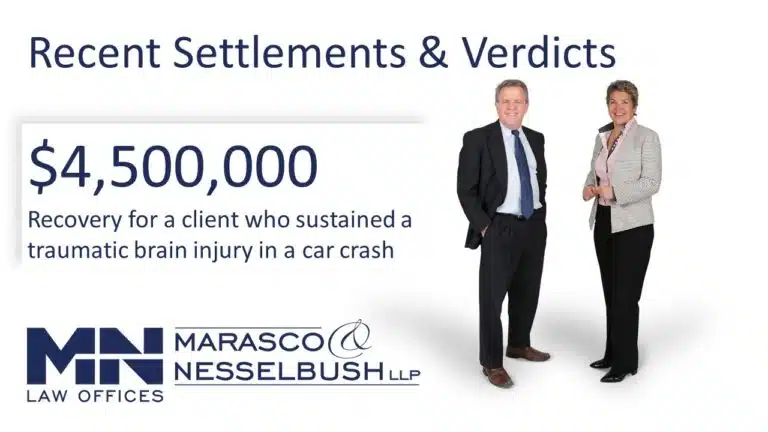
- $4.5 Million Recovered: For a client who sustained a traumatic brain injury in a serious motor vehicle collision.
- $1.4 Million Recovered: For a family whose son passed away from a brain injury sustained in a high-speed car accident.
- $1.025 Million Pre-Trial Award: For a brain injury survivor who was struck by a vehicle while walking.
- $1 Million Recovered: For a young person who sustained a traumatic brain injury after being struck by a drunk driver.
How a Providence Brain Injury Lawyer Can Help
A traumatic brain injury lawyer manages the legal process while the injured person and family focus on medical care and recovery. The attorney investigates how the injury occurred, connects the neurological harm to the incident, and documents losses that may continue for years.
Our attorneys can help by:
- Investigating responsibility: We gather reports, photographs, video, witness statements, electronic data, and other evidence showing how the injury occurred.
- Developing the medical evidence: We review treatment records, neurological evaluations, testing, and expert opinions to establish causation, severity, and prognosis.
- Calculating long-term losses: We document lost earning capacity, rehabilitation needs, personal assistance, and future medical costs before evaluating a settlement.
- Handling insurers and legal deadlines: We manage communications, required filings, discovery, negotiations, and other legal aspects of the claim.
- Preparing for trial when necessary: We take depositions, work with appropriate experts, and present the evidence in court when the case cannot be resolved fairly.
Careful management of each stage helps protect the claim from missed deadlines, lost evidence, and a settlement that does not account for the injury’s long-term effects.
What Is a Traumatic Brain Injury?
A traumatic brain injury, or TBI, is an injury that affects how the brain works after a bump, blow, or jolt to the head or a force that causes the head and brain to move rapidly.
The damage may be focal, affecting one area, or diffuse across several parts of the brain, and its severity can range from a mild concussion to a life-threatening injury.
Depending on the force involved, trauma may bruise or tear brain tissue, damage blood vessels, or cause bleeding and swelling inside the skull.
Doctors may use neurological examinations and imaging tests such as CT scans or MRIs to identify structural damage, although some injuries are microscopic and may not appear clearly on conventional scans.
A single accident can cause more than one type of brain injury.
Common types of traumatic brain injuries include:
- Concussion: A mild TBI caused by a blow or sudden movement that temporarily disrupts normal brain function.
- Brain contusion: Bruising of the brain tissue, sometimes accompanied by localized bleeding or swelling.
- Diffuse axonal injury: Widespread tearing of the brain’s connecting nerve fibers caused by rapid shifting or rotation inside the skull.
- Brain bleed or hematoma: Bleeding within or around the brain, including subdural hematomas that form beneath the brain’s outer protective covering.
- Penetrating injury: An open injury in which an object breaks through the skull and damages brain tissue.
- Skull fractures with brain injury: Breaks in the skull that may be accompanied by bleeding, contusions, or direct damage to the brain.
Traumatic brain injuries remain a major cause of death and disability in the United States.
A CDC report estimated approximately 2.5 million TBI-related emergency department visits, hospitalizations, and deaths in 2010, including 52,844 deaths, while more recent CDC data recorded over 69,000 TBI-related deaths in 2021.
Falls are the most common cause of traumatic brain injuries and account for nearly half of TBI-related hospitalizations.
Signs and Symptoms of a Traumatic Brain Injury
Brain injury symptoms do not always announce themselves right away.
Symptoms can surface hours, days, or sometimes weeks after the injury, which is one reason a head injury is so easy to dismiss in the moment.
The people closest to the injured person often notice the change before anyone else does, in a shorter temper, a lost word, a new difficulty with tasks that were once routine.
Symptoms of TBIs can include cognitive impairment and long-term behavioral changes.
The common symptoms of a brain injury generally include:
- Cognitive impairment: Memory loss, trouble concentrating, slowed thinking, confusion, and difficulty finding words.
- Physical symptoms: Headaches, dizziness, nausea, fatigue, blurred vision, sensitivity to light or sound, seizures, and loss of balance.
- Emotional and behavioral changes: Depression, anxiety, irritability, sudden mood swings, and personality changes that are often hardest on the people closest to the injured person.
A prompt medical evaluation matters here for reasons beyond treatment.
The contemporaneous record it creates can later establish the connection between the injury and the accident, a connection that is often contested when symptoms surface days after the fact.
Injured and not sure what your case is worth? Find out for free.
Common Causes of Brain Injuries in Providence
Almost any serious accident can injure the brain, and how it happened often decides who is responsible and which insurance applies.
According to the Rhode Island Department of Health, falls are the leading cause of traumatic brain injury at every age, and older adults face the highest risk of a serious one.
Rhode Island’s rate of fall-related hospitalizations and deaths among older adults exceeds the national rate, and slip and fall accidents cause many of these injuries.
Icy winters and the steep staircases of the city’s older triple-deckers only add to the risk.
Motor vehicle crashes are the next leading cause. On routes like Interstate 95 and the Route 6 and 10 connector, a collision can generate forces capable of causing severe brain injury.
Common causes of brain injuries in and around Providence generally include:
- Falls: A fall on an icy sidewalk, an unsafe stairway, or a wet floor can cause a serious head injury, and a premises liability claim may follow when a property owner failed to correct a known hazard.
- Motor vehicle accidents: Car accidents, truck collisions, and motorcycle crashes are a frequent cause of TBI, particularly for riders, pedestrians, and cyclists who have little protection in a collision.
- Workplace accidents: Falls from height, falling objects, and struck-by incidents on job sites are a common source of head injury, and an injured worker may also have a workers compensation claim.
- Assaults and violence: A blow to the head during an assault can cause a lasting brain injury, sometimes long after the visible wounds have healed.
- Sports and recreation: Contact sports, cycling, and similar activities cause concussions and other serious injuries, particularly among young athletes.
- Medical negligence: A surgical error, a delayed diagnosis, or a loss of oxygen during a procedure can injure the brain, and serious medical malpractice can leave a patient permanently harmed.
Treatment and Long-Term Recovery
Treatment for a serious TBI usually begins in an emergency room, where the goal is to keep the person alive and prevent further damage to the brain.
For a severe injury, that can mean surgery to stop bleeding, remove blood clots, repair a fractured skull, or relieve pressure inside the skull.
Recovery rarely ends there. Many people with a moderate or severe brain injury need months or years of rehabilitation to relearn skills the injury took from them.
Much of that work falls on the family, who often become caregivers, schedulers, and advocates while their loved one heals.
Support for families is available through organizations like the Brain Injury Association of Rhode Island, alongside the medical providers guiding a patient’s recovery.
Rehabilitation after a brain injury often includes:
- Physical therapy to rebuild strength, coordination, and balance.
- Occupational therapy to relearn everyday tasks like dressing, cooking, and returning to work.
- Speech and language therapy to restore communication and, in some cases, the ability to swallow safely.
- Neuropsychological and counseling support to address memory, mood, and the emotional toll of the injury.
Even with excellent care, recovery is uncertain, and not everyone returns to who they were.
Some people live with post-concussion symptoms for months, and a moderate or severe injury can raise the long-term risk of seizures and other conditions.
This long and uncertain recovery is a central reason these injuries carry such high lifetime costs, and why the future cost of care must be accounted for before any claim is resolved.
Who May Be Liable for a Providence Brain Injury?
Liability depends on how the brain injury occurred and whose conduct caused or contributed to the harm.
In most TBI claims based on negligence, the injured person must prove that the responsible party owed a duty of care, breached that duty, and caused the injury and resulting losses.
A lawyer can prove negligence by gathering accident reports, medical records, witness statements, video footage, expert opinions, and other evidence connecting the defendant’s conduct to the traumatic brain injury.
Insurance companies often aggressively fight brain injury claims to minimize payouts, particularly when symptoms are not immediately visible or imaging appears normal.
Potentially liable parties may include:
- Negligent drivers: Motorists whose speeding, distraction, impairment, or other unsafe conduct causes a serious crash.
- Property owners and managers: Parties that fail to correct or warn visitors about unsafe stairs, icy walkways, wet floors, or other dangerous conditions.
- Employers and contractors: Companies responsible for unsafe worksites, inadequate training, defective equipment, or the negligent conduct of an employee.
- Healthcare providers and medical facilities: Doctors, nurses, hospitals, or other providers whose negligent treatment causes or worsens a brain injury.
- Product manufacturers and distributors: Companies connected to a defective vehicle component, helmet, tool, medical device, or other unsafe product.
- Bars and restaurants: Alcohol vendors that unlawfully serve a minor or visibly intoxicated patron who later causes an injury.
- Government entities: State or local agencies responsible for certain public vehicles, roads, buildings, or property, subject to special notice requirements and liability limits.
- Multiple responsible parties: More than one person or business may share liability when their combined conduct contributes to the injury.
What Compensation Can Be Recovered in a Brain Injury Case?
The compensation available in a brain injury case depends on the severity and permanence of the harm, the injured person’s medical needs, the effect on employment, and the limitations imposed on daily life.
A claim may include losses already incurred as well as treatment, assistance, and reduced earning capacity reasonably expected in the future.
Serious brain injuries often require expert analysis to estimate the long-term cost of rehabilitation, personal care, and other support.
Rhode Island permits injured people to pursue economic and non-economic damages supported by the evidence, while additional damages may be available in limited cases involving especially egregious conduct.
Economic Damages
Economic damages compensate for measurable financial losses caused by the injury.
A serious TBI claim may require projections covering many years of treatment, rehabilitation, reduced income, and personal assistance.
These may include:
- Current and future medical care: Emergency treatment, hospitalization, surgery, neurological care, medication, follow-up appointments, and reasonably anticipated future treatment.
- Lost wages and reduced earning capacity: Income missed during recovery and the long-term loss caused by an inability to return to the same work or employment level.
- Rehabilitation and assistive needs: Physical, occupational, speech, cognitive, and vocational rehabilitation, along with mobility aids, communication devices, and other equipment.
- Home modifications and transportation: Changes needed to make a home accessible and transportation expenses associated with treatment or permanent limitations.
- In-home and long-term care: Professional nursing, personal assistance, supervision, case management, or residential care required because of the injury.
Non-Economic Damages
Non-economic damages address the physical and personal consequences that cannot be measured through receipts or wage records.
The amount depends on the evidence showing how the brain injury has affected the person’s health, independence, relationships, and quality of life..
These may include:
- Pain and suffering: Physical pain, discomfort, and limitations caused by the injury and treatment.
- Emotional and psychological harm: Anxiety, depression, frustration, behavioral changes, and other emotional effects associated with the TBI.
- Permanent disability or impairment: Compensation for lasting cognitive, physical, communicative, or behavioral limitations.
- Loss of enjoyment of life: The inability to participate in activities, routines, and experiences the person previously valued.
- Disfigurement: Compensation when the accident or related treatment causes permanent visible injuries.
A spouse or certain other qualifying relatives may also have a separate claim for loss of consortium, society, or companionship when the injury substantially affects the family relationship.
Wrongful Death Damages
When a brain injury results in death, Rhode Island law may permit several related claims.
The principal wrongful death action is generally filed by the executor or administrator and may include the decedent’s projected earnings and the value of lost homemaker services, subject to the statutory calculation.
The estate may separately pursue hospital, medical, and other expenses incurred before death, diminished earning power between the injury and death, and the conscious pain and suffering the person experienced.
A spouse, child, or parent may also have an individual claim for losses such as consortium, society, companionship, grief, emotional distress, and loss of enjoyment of life, depending on the family relationship.
Rhode Island law currently provides a minimum recovery of $350,000 when a defendant is found liable under the state’s principal wrongful death provisions.
The minimum does not guarantee a settlement or eliminate the need to prove fault, causation, and damages.
Rhode Island Laws That May Affect Your Providence Brain Injury Case
Rhode Island filing deadlines, comparative negligence rules, and governmental liability statutes can affect whether a brain injury claim may proceed and how much compensation is recoverable.
The applicable requirements depend on how the injury occurred, the identity of the responsible party, and whether the claim involves medical malpractice, public property, or another area governed by special rules.
Missing a deadline or required notice can prevent an otherwise valid claim from moving forward.
Rhode Island’s Statute of Limitations
Under R.I. Gen. Laws § 9-1-14(b), most Rhode Island personal injury actions must be filed within three years after the cause of action accrues.
For many brain injuries caused by motor vehicle crashes, falls, assaults, or similar incidents, the filing period generally begins on the date of the injury.
Filing an insurance claim or participating in settlement discussions does not necessarily pause or extend the deadline.
Medical malpractice claims follow a separate three-year statute and may qualify for a statutory discovery rule when the malpractice could not have been discovered through reasonable diligence when it occurred.
Other exceptions may apply under specific circumstances, but delayed symptoms alone should not be assumed to extend the filing period.
Filing Rules for Minors and People Under a Legal Disability
Rhode Island law may postpone the limitation period when the injured person was under 18 or legally of unsound mind when the claim accrued.
Under § 9-1-19, the person generally receives the otherwise applicable filing period after the qualifying impediment is removed.
A serious TBI does not automatically satisfy the statute merely because it affects memory, judgment, or the ability to manage daily affairs; the person’s legal condition and the timing of the disability must be evaluated.
Brain injuries resulting from medical malpractice are governed by separate disability provisions.
Section 9-1-14.1 generally permits a minor whose malpractice claim was not filed within three years of the incident to bring the action up to age 21 and provides a separate rule for qualifying mental incompetence or another recognized disability.
Rhode Island’s Comparative Negligence Rule
Rhode Island follows a pure comparative negligence rule.
An injured person may still recover compensation when they share responsibility for the incident, but the award is reduced in proportion to the negligence attributed to them.
A person found 20% responsible would generally receive 80% of the damages established in the case.
Because the rule directly affects compensation, insurers and defendants may attempt to assign some of the responsibility to the injured person.
Accident reports, witness testimony, photographs, video, electronic data, and expert analysis may be used to establish how responsibility should be divided.
Damage Caps and Claims Against Government Entities
Rhode Island generally does not impose a broad statutory cap on compensatory damages in ordinary personal injury cases against private defendants.
Claims against the state, cities, towns, and fire districts are different: damages are generally limited to $100,000, although the cap may not apply when the governmental entity was engaged in a proprietary function.
Government claims may also involve procedural requirements beyond the ordinary three-year filing period.
Claims against a city or town may require formal presentment before a lawsuit is filed, while a claim involving an injury caused by a defective municipal highway or bridge generally requires notice of the time, place, and cause of the injury within 60 days.
How Much Is a Providence Brain Injury Case Worth?
There is no fixed settlement amount or average value for a Providence brain injury case.
The financial compensation available depends on the severity and permanence of the injury, the strength of the liability evidence, the injured person’s age and employment history, and the effect on daily life and independence.
Medical bills, rehabilitation expenses, medication, assistive equipment, home modifications, personal care, and other out-of-pocket expenses may all contribute to the value of the claim.
Moderate and severe brain injuries can produce long-term or lifelong effects and may require continuing rehabilitation or other medical support.
A claim may also include lost wages and reduced earning capacity when cognitive, physical, or behavioral limitations prevent the injured person from returning to the same work.
Physicians, life-care planners, vocational specialists, and economists may be needed to estimate future medical costs and other losses that have not yet occurred.
Pain, emotional distress, permanent impairment, loss of enjoyment of life, comparative negligence, available insurance coverage, and valid medical liens may also affect the amount recovered.
Our attorneys evaluate each of these factors before recommending a settlement or deciding whether to file suit to pursue compensation through the courts.
Talk to a lawyer and get a free case evaluation today.
What to Do After a Brain Injury in Providence
In the days after a serious brain injury, the injured person is often in no position to protect their own claim, and the work falls to the people around them.
Medical care comes first. Seek medical attention for the injured person without delay, and let the legal questions wait until a loved one is stable.
Once the immediate crisis passes, a few deliberate steps can protect both the person’s health and any future claim.
Steps that can protect a brain injury claim include:
- Follow through on treatment: Keep every medical appointment and follow the plan of care, as gaps in treatment are often used to question how serious an injury really is.
- Document the changes day to day: Record the headaches, missed words, and mood changes as they happen. A plain account of how the injury has altered daily life can become powerful evidence.
- Preserve the evidence: Collecting evidence promptly protects the claim, so save photographs of the scene, any property damage, and the names of witnesses while the details are still fresh.
- Be measured with the insurer: Field phone calls from adjusters with care, and avoid a recorded statement or a settlement offer before the full extent of the injury is understood, which with a brain injury can take months.
- Arrange guardianship if needed: When the injured person cannot make their own decisions, a family member may need to be appointed guardian to act on their behalf, and an attorney can help arrange it.
Handing the legal work to a Providence brain injury attorney lets the family put its energy where it belongs, into the person who is healing.
Marasco & Nesselbush: Providence Brain Injury Attorneys
A brain injury can affect memory, communication, employment, relationships, and the ability to live independently.
Since 1999, Marasco & Nesselbush has represented Rhode Islanders injured in falls, motor vehicle crashes, workplace accidents, medical negligence, and other preventable incidents.
Our personal injury lawyers handle the investigation, insurance communications, medical evidence, settlement negotiations, and litigation while clients and families focus on treatment and recovery.
We pursue full compensation supported by the evidence for medical care, lost income, reduced earning capacity, future assistance, and the lasting personal effects of the injury.
Our bilingual team provides legal representation in English or Spanish from the initial consultation through the resolution of the case.
Marasco & Nesselbush offers free consultations and provides legal services for qualifying brain injury claims on a contingency fee basis, meaning clients pay no attorney fees unless the firm obtains a recovery.
If you or a loved one has suffered a brain injury, our attorneys are ready to review your case in a free case consultation and explain your legal options.
Contact Marasco & Nesselbush today to speak with a Providence brain injury attorney, or visit one of our offices in Providence, East Providence, Warwick, Wakefield, Woonsocket, or Quincy, Massachusetts.